
EBM: The History of a Rhythm That Changed the Dancefloor
There are moments in music when something shifts without any announcement. No manifesto, no press conference, no clear label. It just happens. Something similar occurred with EBM.
In the late 1970s, Europe was undergoing a major sonic transformation. Punk had opened the door to doing more with fewer resources and more attitude. Industrial was beginning to explore noise, machinery, and confrontation. Electronic music was no longer futuristic science fiction; it was becoming a practical tool.
At that intersection, something new was taking shape.
Before It Was Called EBM
To understand the birth of Electronic Body Music, we need to step back slightly.
In the UK, projects like Throbbing Gristle were dismantling any traditional idea of what a song should be. Noise, manipulated tapes, rudimentary rhythms, and an uncomfortable stage presence. This was not music designed for dancing.
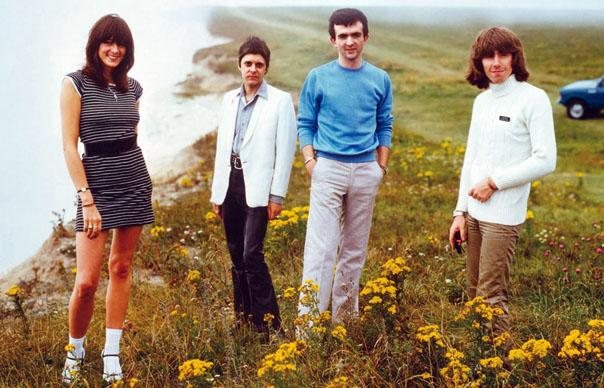
At the same time, Cabaret Voltaire began introducing more structured rhythms into the industrial framework. Repetition was there. Sequences were there.
Meanwhile in Germany, Kraftwerk had already demonstrated that a repetitive electronic structure could sustain an entire song. Mechanical precision. Minimalism. Control.
But something was still missing. The physical element.
Germany and Belgium: When Rhythm Became Central
In the early 1980s, the European scene began moving in a different direction. In Düsseldorf, Deutsch Amerikanische Freundschaft had stripped their sound down to its skeleton: rhythm, bass, voice. Nothing more. Direct, repetitive, almost hypnotic.
In Belgium, Front 242 emerged in 1981. This is where the concept started to solidify.
Front 242 were not just using electronic sequences. They organized them so that rhythm became the absolute center. The vocals were not melodic in the traditional sense. They were declarative. Functional. Part of the machinery.
During this period, the term Electronic Body Music began to circulate to describe a sound that was neither purely industrial nor synthpop. It was electronic music built for the body. Built to move.
The Club as a Laboratory
In the early 1980s, EBM was not a record-store category. It was a club experience.
Belgium, Germany, and later the UK shared something essential: spaces where alternative music intersected with dancefloor culture. This was not the hedonistic commercial disco scene. It was darker.
A formula began to take shape:
- Steady 4/4 rhythm
- Sequenced bass as the central axis
- Synthesizers without excessive decoration
- Firm vocals, often dry and direct
Nitzer Ebb and Consolidation
By the mid-1980s, Nitzer Ebb appeared in the UK. Their approach pushed the sound into an even more physical dimension. Live, their presence was almost martial. Minimal choreography, repetitive gestures, constant intensity.
With them, EBM moved beyond a localized scene and began circulating more widely across Europe and the United States.
It was no longer just Belgium and Germany. It was a network.
Differences from Related Genres
It’s important to understand what EBM was not.
It was not synthpop, even if they shared machines. Synthpop leaned toward more accessible melodies and conventional structures.
It was not pure industrial, even if it shared hardness. Industrial often remained rooted in experimentation and abstract noise.
EBM positioned itself between the two, but with a clear decision: rhythm first.
And that decision changed the relationship with the audience. The body became an active part of the sound.

The 1990s: Mutation and Expansion
With the arrival of the 1990s, the landscape shifted. Part of EBM merged with electro-industrial. Another part influenced darker strands of techno. Some bands hardened their sound. Others softened it.
The term remained, even as the sound diversified.
European festivals began consolidating a broader scene where EBM, industrial, darkwave, and other subgenres coexisted. The audience was no longer limited to alternative clubs; it had become an established community.
Renaissance and Contemporary Scene
In the 2000s and 2010s, new generations rediscovered the classic sound. Dry sequences returned. Minimal aesthetics returned. Unadorned rhythm returned.
German and Scandinavian labels helped drive that revival. At the same time, industrial techno adopted elements clearly inherited from early EBM.
Today, the term remains alive. Not as a relic, but as a clear reference point. When a track is built on firm repetition, dominant bass, and direct structure, the shadow of EBM is there.
International EBM Day
February 24 marks International EBM Day. Beyond the symbolic date, it’s a perfect excuse to remember that this sound was born at the intersection of machine and movement.
It wasn’t a passing trend. It was an aesthetic and physical decision.
And every time a dry bassline hits a dancefloor and forces bodies to move, that story begins again.
15 Essential Tracks to Understand EBM
This is not a definitive list. It’s an entry point. If someone wants to understand what EBM is, here is the basic pulse.
1. Front 242 – “Headhunter” (1988)
Probably the most recognizable track in the genre. Solid sequencing, clear structure, and a production style that defined the second half of the 1980s.
2. Deutsch Amerikanische Freundschaft – “Der Mussolini” (1981)
Extreme minimalism. Direct rhythm. One of the moments when the body became the absolute center.
3. Nitzer Ebb – “Join in the Chant” (1987)
Attitude, repetition, and physical energy. It quickly became an anthem in live shows.
4. Signal Aout 42 – “Submarine Dance” (1989)
Rawer, drier. Pure rhythmic architecture.
5. Proceed – “Koma” (2006)
Powerful and obsessive. Defines the more minimalist German strand of EBM.
6. The Klinik – “Moving Hands” (1989)
Darker and more atmospheric, but with the same steady pulse.
7. Armageddon Dildos – “East West” (1988)
Representative of the German EBM sound aimed squarely at the dancefloor.
8. A Split-Second – “Flesh” (1986)
A clear bridge between new beat and EBM. Hypnotic and direct rhythm.
9. Pouppée Fabrikk – “Die Jugend Marschiert” (1990)
The Scandinavian expansion of the sound. More aggressive, more industrial.
10. Vomito Negro – “Baby Needs Crack” (1985)
Rawer and dirtier. An important part of the Belgian context.
11. Esplendor Geométrico – “Moscú Está Helado” (1981)
Not strictly EBM, but its mechanical repetition and rhythmic focus influenced the harder electronic scene, including in Spain.
12. The Neon Judgement – “Chinese Black” (1984)
Dark electronic rock with early EBM DNA.
13. Bigod 20 – “The Bog” (1987)
More industrial in production, but clearly within the EBM spectrum.
14. Orange Sector – “Monoton” (1995)
Represents the continuation of the sound into the 1990s.
15. Spetsnaz – “Grand Design” (2003)
The classic EBM revival of the 2000s. Dry, direct, without ornamentation.
