Chris Corner talks to Other Voices about UNMASK EP and IAMIXED, two releases that close one cycle and leave the questions open.
There is something deliberately anticlimactic about the way Chris Corner presents what, for almost any other artist, would be an occasion for triumphant reissue fanfare. UNMASK EP and IAMIXED: Reworks Fault Lines Albums 1 and 2 arrived on digital platforms on 22 May 2026, two years after circulating in physical format during the Fault Lines² tour. UNMASK in Europe only. IAMIXED in North America only. A geographical split that was never a logistical convenience but part of the project’s own logic: two distinct objects for two distinct moments of the same tour, made for those who were present.
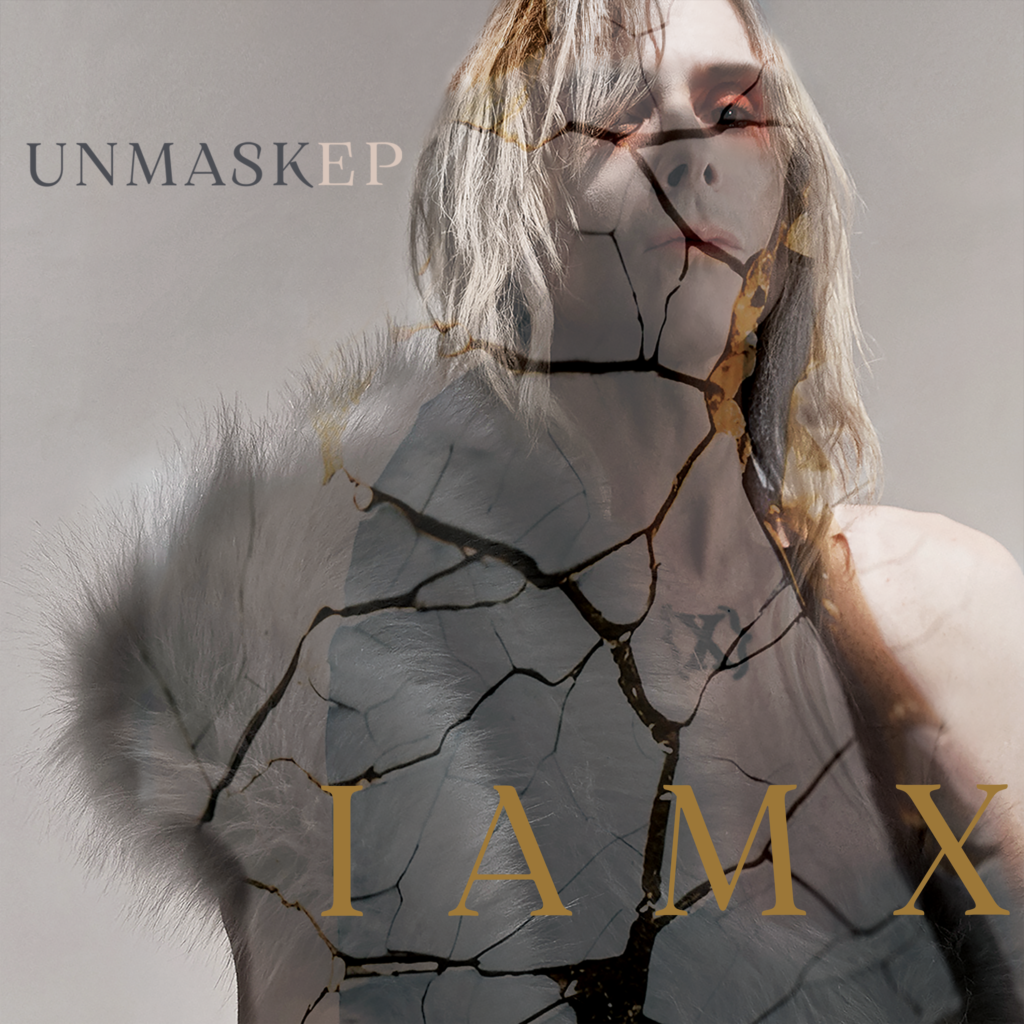
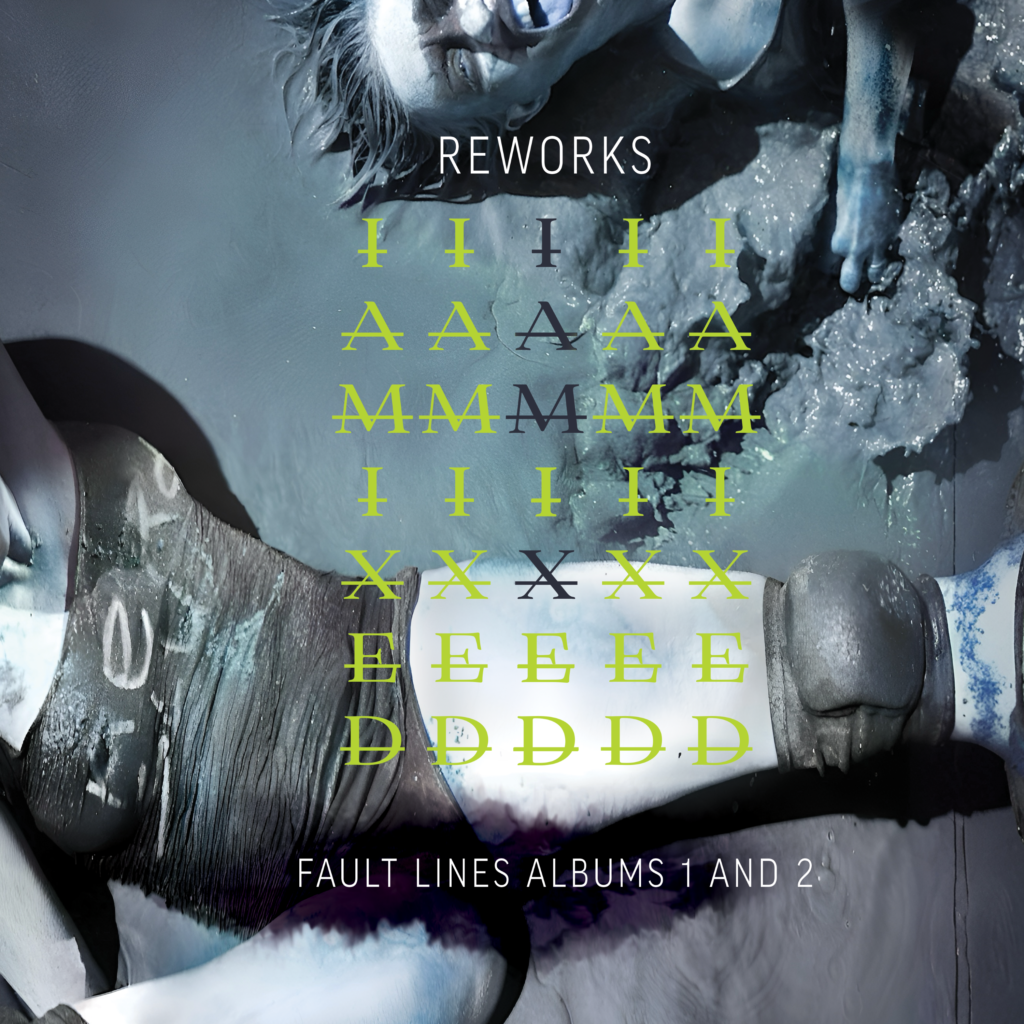
Now they come to streaming. Corner announces it without ceremony.
That restraint is not distance or indifference. From the earliest IAMX records, Chris has maintained a formal consistency rooted more in conviction than in strategy. The project has shifted, absorbed currents from darkwave, electro-industrial and the more corrosive end of pop, but always with a recognisable identity that owes nothing to the prevailing trend.
Fault Lines and Fault Lines² represent the most recent chapter of that trajectory: two albums that arrived during the pandemic and its aftermath, recorded with the economy of means Corner has turned into method. UNMASK and IAMIXED are not appendices to that cycle. They are its reverse side. Where the albums build, these records dismantle and reassemble: UNMASK turning inward, with Corner revisiting his own material from a different angle; IAMIXED turning outward, with remixes that open the songs to other hands and other readings.
Their arrival on digital does not change what they are. It changes who can reach them.
We spoke with Chris Corner as he finalises rehearsals for his 2026 European summer tour — a run of dates that will bring him back to stages where IAMX has built some of its most loyal audience. The conversation moves at the pace of someone who does not fill silence with unnecessary words. He answers precisely, without detours, and when something is not his to say, he simply does not say it.
What follows are his words.
Chris Corner Interview
The EPK describes “There Will Be Times When I Will Need To Hurt You” as the emotional core of UNMASK. It’s also the track that existed furthest from any public context — no tour video, no single, nothing preceding it. Was keeping it unannounced a deliberate choice, or did it simply never find its moment until now?
The track is basically about hurting and lying to somebody, and owning that. Taking responsibility for it and admitting to yourself that you’re weak, that you fail… and that that’s okay. It’s part of a process. Sometimes that happens.
The timing of its release also coincided with a personal relationship that was falling apart, and I don’t know if I felt particularly good about that person hearing it. It was a strange combination of circumstances.
But creativity has its own drive and force. Sometimes you have to release something because the energy needs somewhere to go. Maybe I didn’t focus on it because I was worried it would make things worse.
At the same time, it never felt like the kind of song that needed pushing. I think people will discover it and connect with it on their own terms. Sometimes songs are more successful that way. It feels like it found its place, and it doesn’t need anything more than that.
It’s also quite difficult for me to listen to because I don’t really want to be in that headspace right now. So it is where it is for good reason, and I don’t think it needs anything more.
The UNMASK version of “Artificial Innocence” is described as more intimate and piano-driven than the single. At what point did you know the piano version wasn’t the right one for release, and what did adding production layers actually solve?
It solved the problem of being finished.
The original version never felt complete. But because it was more of an experimental, low-key release, I didn’t feel much pressure for it to be perfect. That’s probably the wrong word because perfection is impossible, but I felt more relaxed about putting it out in that form.
Then it kept coming back to me. I’d be driving or walking in nature and the song would keep returning. Usually that’s a sign that something isn’t finished.
So I went back to it and asked myself what was bothering me. That’s always where I start. It felt like it needed to sit in a slightly different register. The vocal wasn’t quite right. The performance wasn’t quite right.
I loved parts of it, especially some of the lyrics, and I felt it deserved more attention. But it wasn’t working in its previous form. So I started working on it again without any grand plan. It gradually developed into the version that exists now.
People often get attached to demos — demo-itis. “Why did you change this?” and “Why did you change that?” I haven’t really had that response with this track, so maybe people prefer the newer version. But that’s not for me to decide. Once something is released, it’s out of your hands. People love it or hate it however they want.
The visual aspect influenced it too. Whenever I start working on a video, I end up going back to the music. I change the track, then I change the video, then the track again. They begin influencing each other.
That happened here as well. The song wasn’t really finished until the video was finished. I was constantly moving back and forth between the two. That seems to be my style.
Of all the IAMIXED contributions, the two IAMX reimaginings stand apart — an orchestral “War Of Words” and a modular reinterpretation of “In Bondage.” Was that contrast deliberate, or did each track simply tell you what it needed?
It was deliberate, although often those ideas emerge once I’m already in the flow of working. Sometimes things simply arrive creatively. I’ll suddenly think of a song differently and start imagining what else it could become.
One of the benefits — and problems — of producing your own work is that you have immediate access to the tools to change it. You can have an idea and act on it instantly.
With “War of Words,” I always loved the original version, but over time I started feeling it was really an orchestral song. Sometimes it takes me years to understand what a track actually wants to be. I’ll finish something and then, years later, realize there was another direction hidden inside it.
I’ve made peace with not always knowing that in the moment. That’s one reason I enjoy revisiting older material.
As for “In Bondage,” that version originated from a mix I created for a private event at my property in California. The event was built around themes of sexuality and exploration. Nothing particularly outrageous happened, but that was the concept.
Because it was “In Bondage,” it naturally felt like a track that wanted to be played with. I created that version specifically for the event and performed it live. Afterwards it just sat there, waiting for a purpose. When the idea for IAMIXED came along, it finally found one.
So yes, both tracks had very deliberate concepts behind them.
You’ve described encouraging contributors to completely reappropriate the material and stamp their own identity on it. But IAMIXED still sounds like a record with internal coherence. How much of that cohesion comes from your curation, and how much from Ryan McCambridge mastering the whole thing with the same ears that mixed both Fault Lines albums?
IAMX is my baby, and it’s incredibly important to me that everything feels cohesive. Musically and visually, I would never put something together that felt fragmented if I had any control over it. And I do have control over it. Everything is self-produced, self-released and self-curated.
Ryan was a big part of achieving that cohesion, but it was a shared effort. We were both very conscious of what was selected, how it was mixed, and how each piece related to everything else around it.
A lot of thought went into making the record feel like a unified body of work, so I’m glad that comes across.
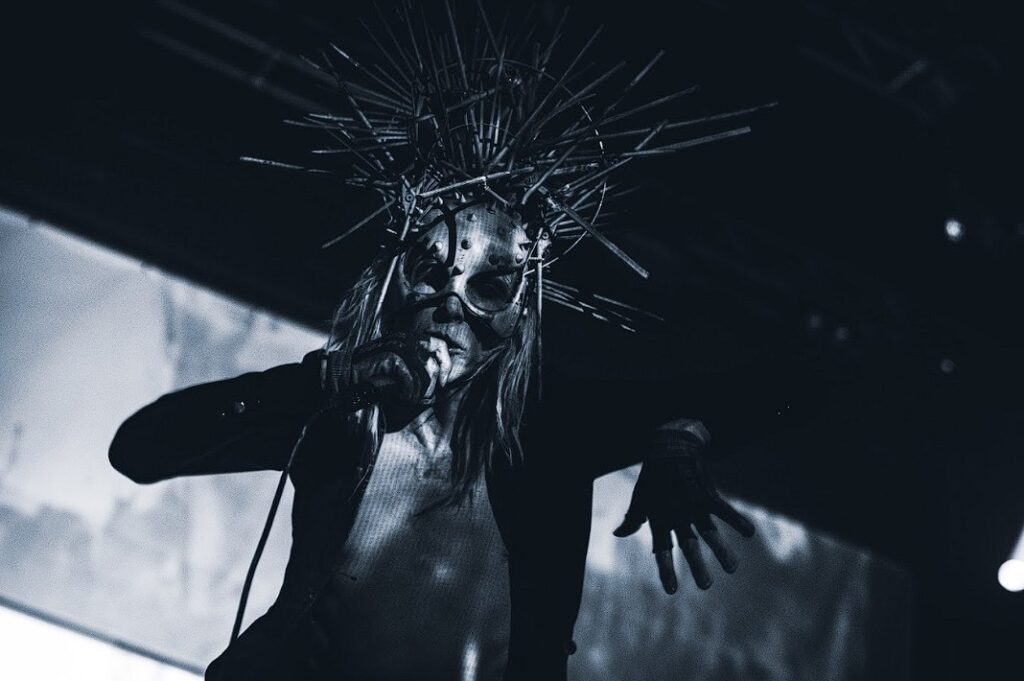
IAMX started in 2004, the same year Kiss + Swallow came out. Twenty-two years later, the project has outlived the music industry that existed when it began. What part of the original impulse behind IAMX has survived intact, and what has the project had to become in order to still exist on its own terms?
The thing that’s survived is adaptation.
IAMX has always been flexible. The art remains the most important thing, and not compromising artistically has always been central to it. The methods of promotion and presentation have changed dramatically, especially with social media, but the core hasn’t.
It’s an independent project that adapts in order to survive. It’s always been fiercely independent.
At the end of the day, I can’t do anything else. So I’ve had to find ways to remain financially sustainable without compromising artistically. Somehow I’ve managed that.
It’s hard work, but that’s really the foundation of IAMX.
Aesthetic and conceptual coherence are still important to me. Everything has to make sense. It has to look right. It has to sound right.
As for the music industry itself, I’ve never felt like I understood it. I’ve always found the record-label world anxiety-inducing. Even before things became fragmented and chaotic, it was still fundamentally broken. Artists were underpaid and often exploited.
Every stage of the industry’s evolution has felt like another step toward devaluing art.
The one constant has been the live side of IAMX. Touring and performing have always kept it grounded, energetic and real.

The Sneaker Pimps reunion record is back in the picture. UNMASK and IAMIXED close — or at least pause — one cycle of IAMX. Without asking you to announce anything: what kind of problem is the next thing trying to solve? Not what it will sound like, but what question it starts from.
The Sneaker Pimps situation is a sticky subject, and honestly I don’t have any information right now that would help answer that question. I genuinely don’t know.
IAMX live — European dates 2026
Chris Corner takes IAMX back to European stages throughout summer and autumn. Confirmed dates:
| Date | City | Venue |
|---|---|---|
| 31 Jul – 1 Aug | Thale, DE | Unter dem Himmel |
| 9 Aug | Hildesheim, DE | M’era Luna |
| 18 Aug | Stockholm, SE | Intimate Conversations With IAMX |
| 19 Aug | Stockholm, SE | Kollektivet Livet |
| 21 Aug | Leiria, PT | Extramuralhas |
| 23 Aug | Manchester, UK | Infest |
| 18–19 Sep | Oberhausen, DE | UNITY |
| 23 Sep | Oslo, NO | John Dee |
| 24 Sep | Malmö, SE | Plan B |
| 25 Sep | Helsinki, FI | On The Rocks |
| 2–3 Oct | Berlin, DE | UNITY |
Tickets and full information at iamxmusic.com/pages/iamx-live
UNMASK EP and IAMIXED: Reworks Fault Lines Albums 1 and 2 are available on all digital platforms from 22 May 2026.