
Interview from Freedonia with Suzi Sabotage, one of the key voices in contemporary darkwave
By Josi for Other-Voices.com
In the middle of Barcelona’s heatwave, Freedonia hosted a highly anticipated date for the local darkwave community. Suzi Sabotage landed in the city for the first time, just before her concert in Madrid. We had the pleasure of sitting down with her to talk about her roots, her creative contradictions, her political involvement, and the alternative scene in Finland. Thanks to Marc from Ossarium for organizing it.
Interview with Suzi Sabotage
Josi: You moved from bands like Melusaaste and Masquerade to a strong solo career. What parts of that journey still shape your music today?
Suzi Sabotage: Everything has been useful. Especially traveling: discovering cultures, playing live, receiving feedback, good and bad. It shapes you, not only as a musician but as a person. It forces you to grow, adapt, and understand the business side of things.
Josi: Your latest track, Suden Sinti, marks a shift toward Finnish lyrics and more symbolic, primal themes. Is that a one-time move or a direction you plan to continue?
Suzi: I think it comes from being a bit tired of urban life. I don’t know if it’s age or what, but there’s a need for simplicity, for being alone, for questioning society’s norms. Even though I still love huge cities like Los Angeles, I’m also drawn to the idea of living in the middle of the forest. I’m someone who lives in extremes.
Josi: Postmodern Dystopia felt like a turning point, more political and harsher. Did it redefine your artistic mission?
Suzi: Yes, it was an important foundation. There were songs left out that could have taken the album somewhere else, but I like how it turned out. I don’t stay still; I need to change. But I’m also aware that not everyone follows those changes, so I take my time so people can come with me without losing my essence.
Josi: You were one of the driving forces behind the Gods for Palestine compilation with a new version of I Am the Storm. What led you to get involved, and how do you see the intersection between dark music and activism?
Suzi: I come from punk, and there human rights are not “politics”, they are essential. It bothers me when people trivialize it by saying, “don’t mix music with politics.” Why shouldn’t we talk about this? If we don’t, we’ll be the next ones silenced. This is not spooky aesthetics or a Halloween party. We’re adults. This is also part of our culture.
Josi: Your live vocals are powerful and emotional, yet always precise. Do you sing differently live than in the studio?
Suzi: Completely. The studio can make me neurotic. I repeat takes, everything has to be perfect. Live, there’s no pause button. You just do it. It’s more liberating. Every space, every microphone changes everything.

Josi: First time in Barcelona…
Suzi: I met Vil from Barnadark Fest and we were considering a festival date. Then Madrid came up, and I had to pass through Barcelona, so it felt natural. This city has always had a strong scene for this kind of music. It would have been a shame not to play here.
Josi: Visually, you’ve moved from deathrock to minimal synth and even neofolk aesthetics. Is your stage image planned or intuitive?
Suzi: It’s instinctive. I wear what represents me in that moment. Black lipstick and eyeliner never fail, that stays. Everything else changes depending on how I feel.
Josi: You’ve worked with labels like Young & Cold while maintaining a strong DIY path. What challenges and freedoms have come with that?
Suzi: I’m introverted and Finnish, so at first dealing with people was difficult. But I’ve learned to negotiate without losing patience. No one has asked me to change my style, luckily. There have been disagreements, of course, but everything can be solved by talking.
Josi: You’re often compared to She Past Away, Hante., or Selofan. But which artists, perhaps unexpected ones, inspire you today?
Suzi: These days I’m inspired by my friends. People like Night in Athens or Ratpajama from Brazil. And of course the foundations are always there: Kaelan Mikla, Siouxsie, Xmal Deutschland. But now it feels more symbiotic. We inspire each other.
Josi: There’s a wave of Finnish bands like Aus Tears, Naakka, or Kasvot. Do you think Finland is becoming a new epicenter for darkwave?
Suzi: We won’t be Barcelona in terms of size, but the scene is growing. I’ve seen sold-out shows, and that used to be unthinkable. The old guard is still there, but new blood is revitalizing everything. If new people don’t come in, the scene dies with us.
Josi: Thank you very much, Suzi. Enjoy the show.
Suzi: Thank you!
The Concerts: Newborn Ghost and Suzi Sabotage
After an intense and revealing interview with Suzi Sabotage under Barcelona’s suffocating heat, it was time to dive into the music. And there was no better setting than the welcoming alternative temple of Freedonia.
The evening opened with Newborn Ghost, essential figures in the local circuit, delivering a solid and precise set filled with melodic tension and rhythmic rawness. Bela, with a voice that has earned its place among the most powerful in contemporary darkwave, once again proved why her presence is so highly regarded.


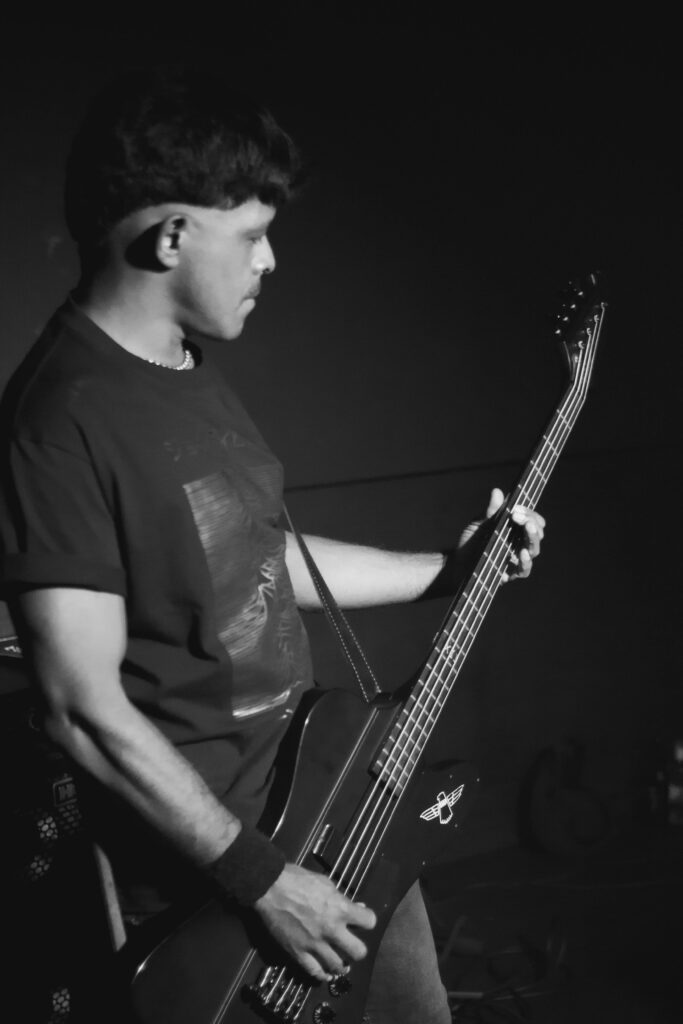
Then everything grew a little darker.
With a minimalist yet effective stage presence, Suzi Sabotage took the stage. No gimmicks, no elaborate setup. Just her and her voice.
There was dancing, yes, but there was also attentive listening. Suzi performed both recent tracks and classics from her catalog, moving longtime fans as well as newcomers experiencing her live for the first time.


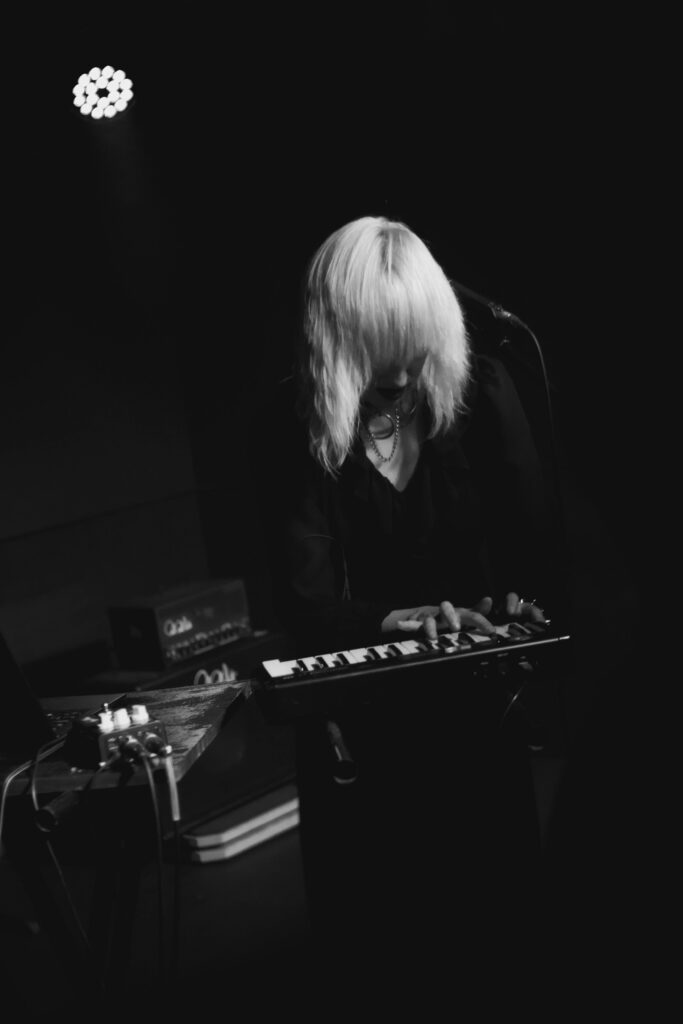
And for those who organize small but intentional events, that is a gift. Being able to see artists who travel from afar and do not regularly play in our city is a real privilege, something we do not take for granted. Thank you, Vil, for making it possible.
