
The Lost Connection Between Italo-Disco and Darkwave
The Birth of “Spaghetti-Disco”
To understand Italo-Disco, one must first strip away the condescending labels. In the late ’70s, American Disco was dying under the “Disco Sucks” banner. In Italy, however, a lack of budget forced a generation of producers—many coming from Progressive Rock—to lock themselves away with machines.
The term Spaghetti-Disco was an attempt to replicate the success of the Spaghetti Western. It was a marketing label for a sound that was, in reality, pure synthetic experimentation. While Munich’s Euro-Disco (Giorgio Moroder) was elegant and polished, Italo was raw, lo-fi, and deeply synthetic. This crudeness is exactly what would attract Europe’s darker ears years later.
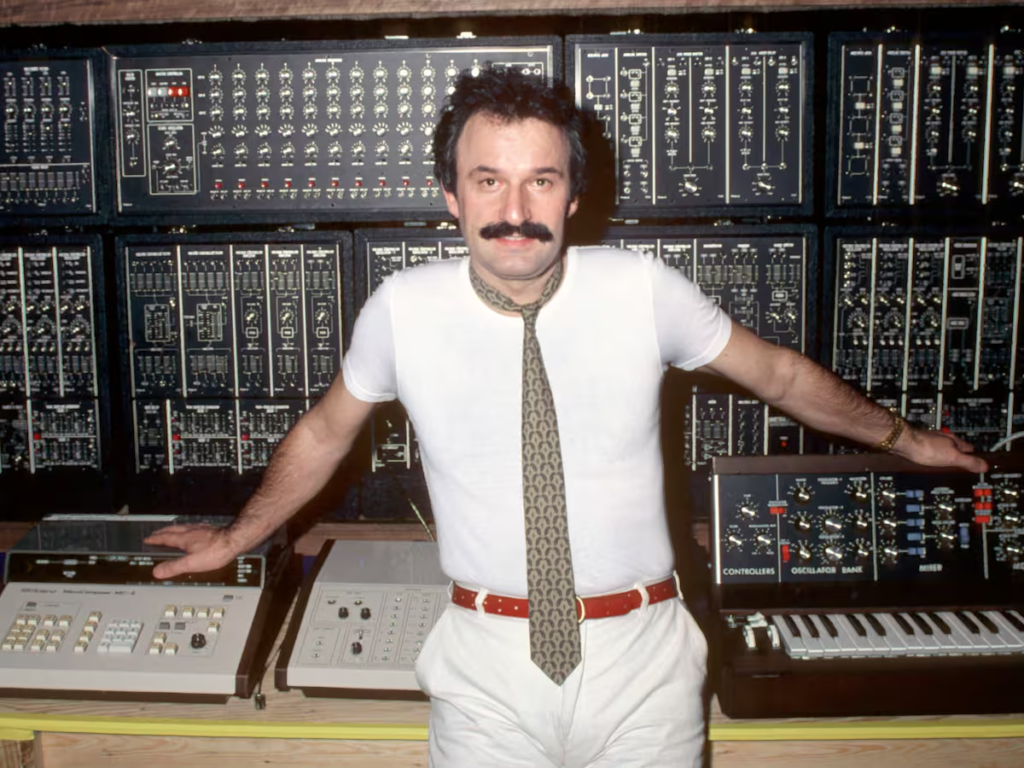
The Duality of Italo-Disco: “Luminous” vs. “Chilled” Italo
Not all Italo-Disco was suitable for pop festivals. We can divide the scene into two coexisting branches:
- The Pop Branch (The Storefront): Artists like Gazebo or Ryan Paris laid the foundations for melancholic melody. Here, the use of the minor scale began to differentiate Italo from American Disco, introducing an inherent sadness that resonated with Post-punk sensibilities.
- The Cyber/Dark Branch (The Underground Root): Producers like Claudio Simonetti (from the Prog-Horror band Goblin) injected a cinematic and macabre aesthetic. Tracks like “Confusion” by Aleph or the productions of Sangy began experimenting with more rigid rhythms and oppressive atmospheres.
The Steel Bridge: From Italo-Disco to New Beat and EBM
One of the most persistent myths in alternative music is that EBM (Electronic Body Music) and New Beat were born exclusively from the austere Kraftwerk or the British Industrial of Throbbing Gristle. However, the rhythmic reality is different: Italo-Disco was the “Trojan horse” that introduced rigid sequencing to European dance floors.
In the mid-’80s, DJs in Belgium like Dikke Ronny began playing 45 RPM Italo records at 33 RPM (slowing down the speed). This technical gesture transformed dance anthems into dense, swampy, and dark pieces. Tracks like “Flesh” by A Split-Second or the early forays of Front 242 inherited Italo’s arpeggiated bass structures, but stripped them of any trace of Mediterranean joy.
The influence of labels like Italian Records (featuring bands like Gaznevada) was crucial. They blended Post-punk aesthetics with drum machines like the Roland TR-808. This mutation allowed Darkwave to move away from being purely guitar-driven and embrace the synthesizer as a tool for urban alienation.
The Aesthetic of Dystopia: Italo-Disco as Darkwave Language
Why does modern Darkwave owe such a debt to Italo-Disco? The answer lies in technological melancholy.
Italo-Disco always had a fixation with the future, space, and robotic loneliness. While traditional Goth looked to the past and 19th-century literature, “Dark Italo” looked toward a dystopian future. Current bands like Boy Harsher, Linea Aspera, or Lebanon Hanover utilize basslines that are, in essence, slowed-down Italo-Disco structures processed through distortion pedals.
Cult References for Analysis:
- ’Lectric Workers – “Robot Is Systematic” (1982): A piece of electronic minimalism using processed vocals in a way that Synth-goth bands would imitate decades later.
- Mr. Flagio – “Take a Chance” (1983): Considered by many to be the genre’s perfection: a circular, hypnotic, and deeply introspective melody.
Legacy: The “Dark Entries” Renaissance
Italo-Disco didn’t disappear; it simply went underground when commercial, “bubblegum” Eurodance flooded the airwaves in the late ’80s. For decades, these recordings were relegated to bargain bins until the 21st-century Darkwave and Minimal Synth scene rediscovered their potential.
Labels like Dark Entries (run by Josh Cheon in San Francisco), Medical Records, or the Dutch Viewlexx (by I-f) have performed archaeological work, rescuing these lost tapes of dark Italo that never reached the charts.
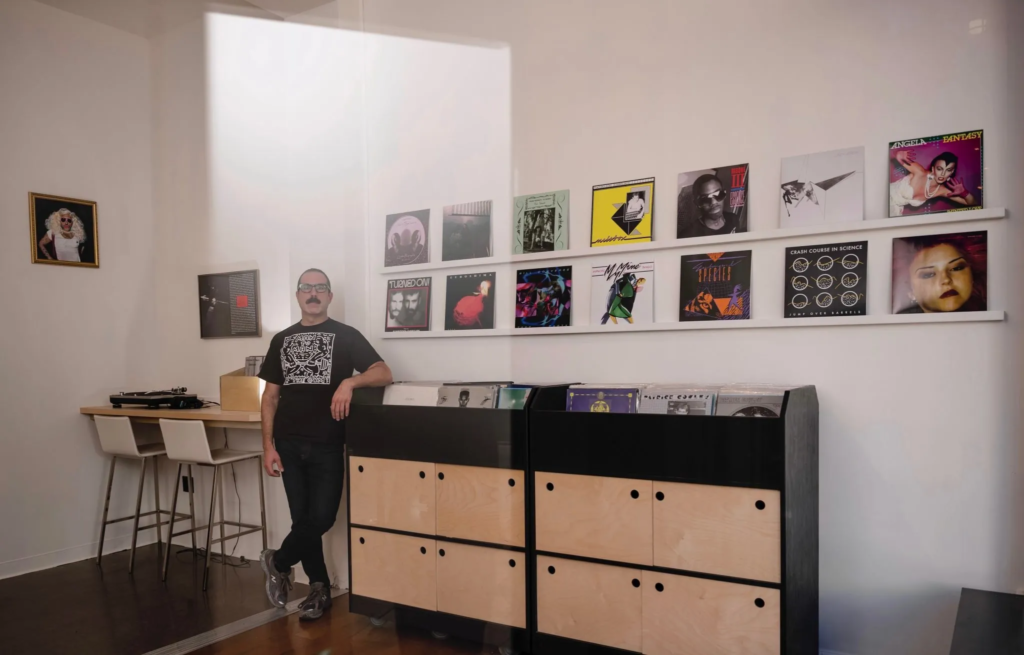
Today, any club playing Coldwave or Minimal Synth is, in some way, paying tribute to those Italian producers who—with a handful of cheap synths and a lot of imagination—created the language of the future. The influence of Italo-Disco is now the backbone of festivals like Ombra Festival in Barcelona or Grauzone in the Netherlands, where its sound blends with the coldest Post-punk.
Cult Guide: The “Holy Grails” of Dark Italo
5 Essential Pieces
- Charlie – “Spacer Woman” (1983, Maurice Records) Arguably the most important record for understanding the transition to Cyber-Italo. Its hypnotic arpeggio and robotic female vocals are the original blueprint for what we now call Minimal Wave.
- Why seek it out: It is the perfection of “space loneliness” turned into music.
- Alexander Robotnick – “Problèmes d’amour” (1983, Fuzz Dance) Maurizio Dami (Robotnick) created an avant-garde piece that sounds more like Detroit or Sheffield than the Italian Riviera. His use of the Roland TB-303 before the Acid House explosion makes it a piece of technical archaeology.
- Why seek it out: Its existentialist French tone is a direct bridge to Coldwave.
- My Mine – “Hypnotic Tango” (1983, Progress Record) Despite its commercial success, its structure is purely mechanical and obsessive. It has been sampled endlessly, but the original version retains a patina of nocturnal mystery that fits perfectly in a Darkwave set.
- Why seek it out: For its ability to create a decadent European club atmosphere.
- Kirlian Camera – “Blue Room” (1985, Italian Records) Before becoming legends of Darkwave and Neofolk, Angelo Bergamini and company produced somber Italo-Disco tracks. This is a gem of synthetic melancholy that proves the genre could be deep and spiritual.
- Why seek it out: The definitive example of a Gothic group using the language of Italo.
- Fred Ventura – “The Years (Go By)” (1985, Time Records) Ventura is the quintessential voice of Italo, but in this track, he captures the nostalgia of time passing—a theme prevalent in Post-punk lyrics. The production is impeccable, with a drum machine that hits with the force of early EBM.
- Why seek it out: It represents the perfect balance between pop melody and inner desolation.
