By Other Voices Magazine · Genre: Coldwave · Underground Scene · History
What Is Coldwave Music: The Sound Born From Political Cold
Western Europe in 1978 was not a comfortable place. Inflation had gutted the purchasing power of an entire generation, unemployment figures were the kind governments preferred not to announce too loudly, and the Cold War had long stopped being an abstract geopolitical concept. It had become a default mental state. Punk had answered all of that with fury and three chords. But by the end of the decade, a different question was forming in rehearsal spaces across France, Poland, and Belgium: what happens when the anger runs out and only the cold remains?
The answer was coldwave.
Before the Definition, the Context
There was no manifesto. No founding meeting, no label that decided to invent a genre. What happened was slower and more organic: post-punk bands who had grown up listening to Joy Division, Siouxsie and the Banshees, and Kraftwerk’s Trans-Europe Express (1977, Kling Klang) began getting access to portable, affordable synthesizers. Those instruments let them build something a guitar alone could not. Sequences that never tired, frequencies that filled a room in ways that were impossible to ignore. The warmth and imprecision of live performance was exactly what they were leaving behind.
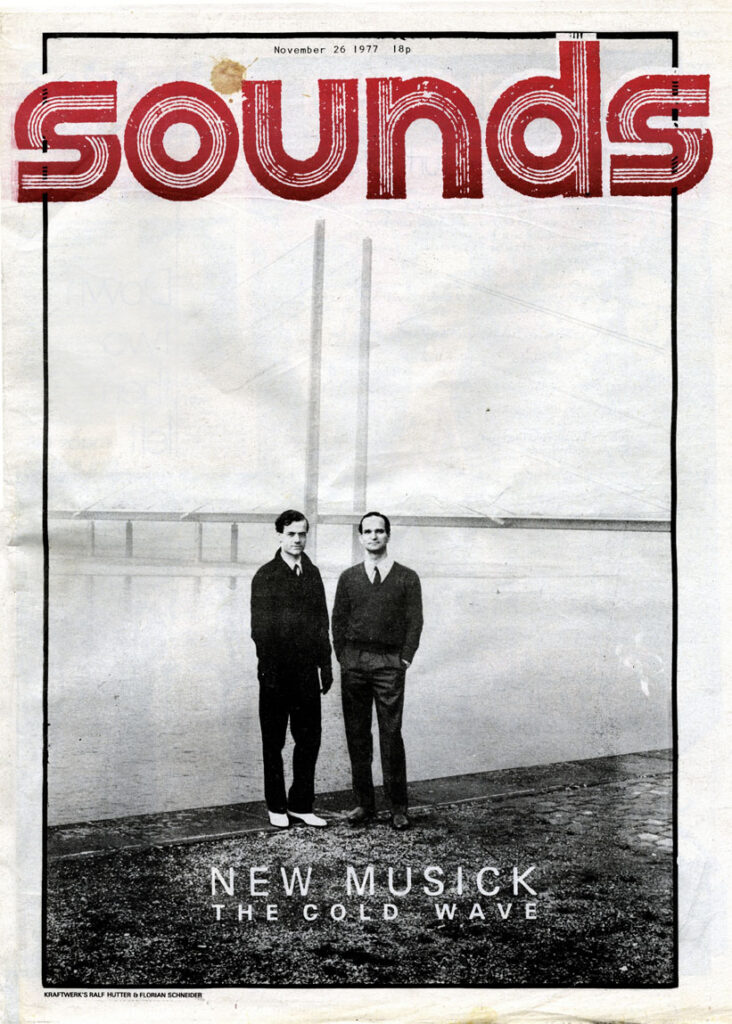
The name arrived before the genre had fully formed. In November 1977, British music magazine Sounds ran a cover featuring Ralf Hütter and Florian Schneider of Kraftwerk under the headline “New musick: The cold wave”. The following week, journalist Vivien Goldman applied the same term to a piece on Siouxsie and the Banshees. Two references, two signals: Germanic electronics and the darkest strain of British post-punk. The vocabulary existed before the music had fully claimed it.
What followed was a scene built from the margins of the industry, in cities that were not London or New York, sung in languages the Anglo-American market was not listening to.
La Vague Froide: France as the Coldwave Music Laboratory
In France, where the scene was known as la vague froide, the most productive period ran from 1980 to 1985. The mechanism was cassette culture: low-fidelity recordings, hand-numbered runs, distribution by post between collectors. An economy of scarcity that produced, against all logic, an extraordinary volume of material.
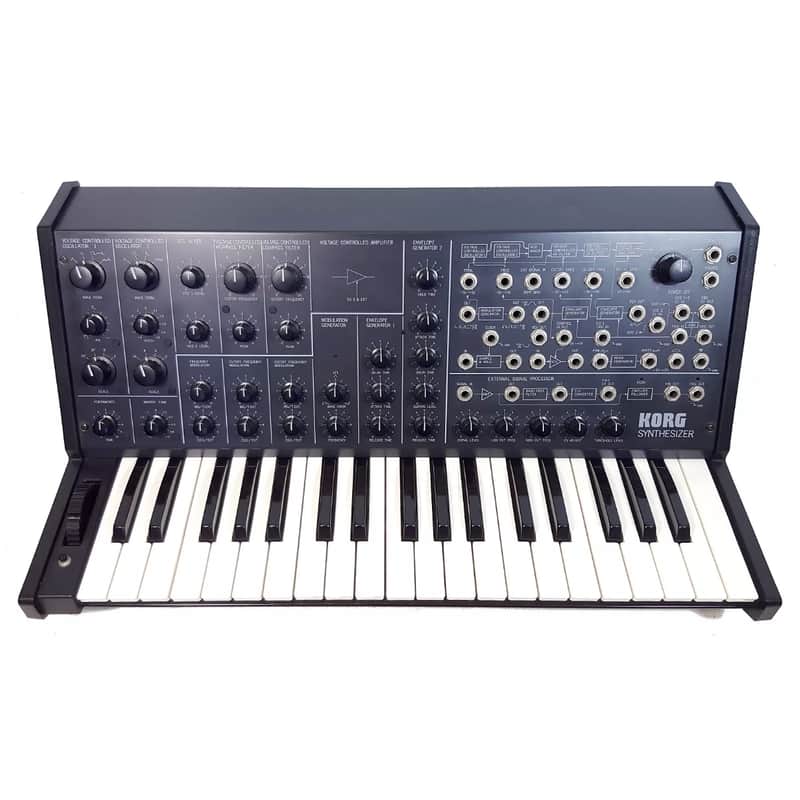
The instrument that appeared most consistently in those recordings was the Korg MS-20, manufactured between 1978 and 1983. That overlap is not coincidental: the synthesizer’s production run matches almost exactly the years when coldwave was at its most active. The MS-20 was portable, affordable, and demanded no formal training. That mattered enormously. It put in the hands of musicians coming from punk a capacity to build music that had previously required professional studios or budgets nobody in this scene had.
The result was not synthpop or new wave. It was something with different priorities: more austere, more committed to the rhythm, less interested in a commercial hook, with a DIY ethic pushed to its logical extreme. As Crack Magazine described the sound: “controlled yet colder than that of their snotty predecessors, punk with a depressive groove”. Less guitar, more analogue experimentation, rigid rhythmic structures, and vocal delivery that was flat by choice.
Marquis de Sade: The Coldwave Starting Point
The point of origin has a specific name: Marquis de Sade, a band from Rennes whose album Dantzig Twist (1979) is consistently cited as the first canonical document of the genre. The reference to the Marquis was not decoration. There was something in the French tradition of intellectual provocation, of subverting from within established forms, that aligned with post-punk’s attitude but added an ironic distance that British punk rarely had. The sound of that record, a mixture of post-punk, minimal wave, and dissonant funk, was unclassifiable even within a genre that did not yet have a name.
KaS Product: más fríos si cabe
KaS Product: Colder Still
Mona Soyoc and Spatsz formed KaS Product in 1980. Their album Try Out (1982, Lively Arts) is one of the strangest and most influential documents of the entire period. Soyoc’s voice, processed to strip it of warmth, moved over synthesizer sequences with a detachment that felt total. The sound incorporated dissonant jazz elements and raw electronics with no guitar, which made them unclassifiable even within a scene already difficult to place. Critic James Greene wrote that KaS Product took coldwave “to icier places in the early 1980s and ended up one of its preeminent voices.”
Martin Dupont: melancolía marsellesa
Martin Dupont: Coldwave With a Dramatic Dimension
Martin Dupont formed in Marseille with a lineup that included Alain Seghir, Brigitte Balian, and Catherine Loy, later joined by Beverly Jane Crew, a classically trained musician who brought clarinet and saxophone to a palette already unusual for the genre. Three voices, two of them female, over minimal synthesizers and drum machines: that combination gave their work a dramatic range that the more austere end of coldwave deliberately avoided.
They released three albums on their own label Facteurs d’Ambiance: Just Because (1984), Sleep Is A Luxury (1985), and Hot Paradox (1987), then dissolved. Their recovery came decades later, when New York label Minimal Wave compiled their work on Lost and Late (2008) and later in a five-LP box set. The fact that Kanye West, Tricky, and Madlib have all samplead them says something precise about where their real weight sits within contemporary music production.
Trisomie 21: Coldwave by Subtraction
Trisomie 21, from Denain, released their debut in 1982 and became one of the most internationally cited names when the Anglo-American world eventually started paying attention to French coldwave. Their method was subtraction. Where other bands loaded every element with reverb to generate drama, Trisomie 21 removed it. The Last Song (1986, Scarface) is the track where that logic produces its best results. The synthesizer has space around each note. The tempo is so steady it almost disappears as a perceivable element. Philippe Lomprez sings about the passage of time with a distance that was the only honest way they had of addressing those subjects.
Asylum Party: Coldwave Into Gothic Rock
Asylum Party arrived in the late eighties, with the genre already established, and pushed its electronic austerity toward gothic rock without abandoning it. Their connection to the Touching Pop movement, alongside Little Nemo and Mary Goes Round, placed them at the point of greatest contact between coldwave and mid-decade goth. “Julia” from Borderline (1989) makes their position clearest: the processed guitar arpeggio that opens the track connects directly to The Cure’s Faith (1981, Fiction Records), but the bass and drum machine carry an aridity, something more provincial and unadorned, recorded in conditions that left no room for decoration.
Poland and Belgium: Coldwave Across Different Geographies
France was not alone, but each country arrived at coldwave through its own route.
Siekiera and the Polish Cold Wave
In Poland, the scene was called zimna fala and sat closer to guitar-driven post-punk than the French and Belgian minimal synth tradition. It also carried a dimension that la vague froide could not have: the Iron Curtain. Polish coldwave became entangled with underground resistance to communist authorities, and recordings and performances happened under semi-clandestine conditions. Siekiera, from Warsaw, recorded their most important work in exactly those circumstances. Their debut Nowa Aleksandria (1986, Tonpress) was made quickly, under the pressure of a government that monitored what musicians were putting into circulation. The cold in their music was never purely an aesthetic decision.
Belgium: The Coldwave Bridge to EBM
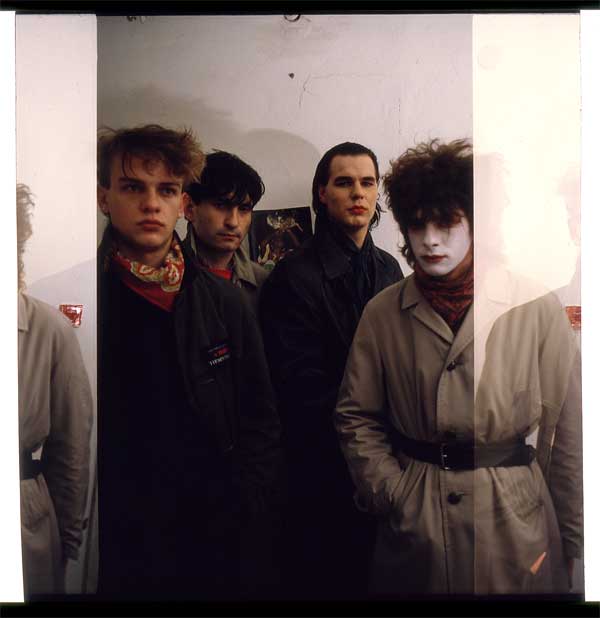
Belgium contributed the electronic severity that would develop into EBM. Siglo XX and the label Les Disques du Crépuscule built a bridge between coldwave’s more melodic strain and European industrialism. That line of influence runs directly to Front 242: their use of rigid sequenced rhythms and processed vocals over cold electronics owes a traceable debt to the Belgian scene that preceded them, and from Front 242 the thread continues through much of the dark electronic music of the nineties.
Coldwave vs. Darkwave vs. Post-Punk: A Practical Map
The three terms overlap consistently, and that creates genuine confusion even among experienced listeners. The distinction is not scientific, but it is useful as orientation.
Post-punk is the broadest territory. Joy Division, Gang of Four, Wire, Public Image Ltd: the intellectual reaction to punk, the deconstruction of its structures, the introduction of melodic bass and reverb as expressive tools. It can be cold or not; synthesizers are optional.
Darkwave works at a larger scale. The epics of The Sisters of Mercy, the textures of Dead Can Dance, the orchestral production on some of The Cure’s records. Darkness is the central value, but the ambition can be considerable.
Coldwave is more austere than darkwave and colder than post-punk. The difference is economy of means: fewer notes, more silence, flatter vocals, rawer production. The SAGE Handbook of Popular Music (2014) notes that “coldwave” was an early synonym for what later became “darkwave”, “goth” and “deathrock.” The retrospective distinction between those labels is partly a question of geography and year: what was coldwave in France in 1982 turns up today on Bandcamp sometimes tagged as minimal synth. The labels shift; the sound does not.
The Coldwave Sound: How to Identify It by Ear
Knowing coldwave by ear is more useful than any definition. Five elements appear with consistency.
The analogue synthesizer as structure. The Korg MS-20, the Roland SH-101, the Juno-60: instruments that generate frequencies with the imperfect warmth of analogue circuitry that digital synthesis has never fully replicated. In coldwave the synthesizer takes the harmonic role of the guitar, or occupies the same level in the mix.
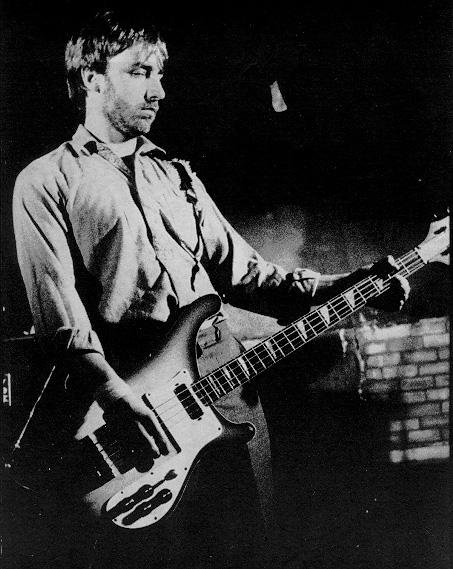
Bass in the foreground. The most direct connection to Joy Division: melodic bass, often with chorus and a light overdrive, carrying the emotional weight of the track. On Closer (Joy Division, 1980, Factory Records), Peter Hook’s bass lines function as a near-second vocal. French coldwave bands adopted that priority and made it their own.
The drum machine. Unlike guitar post-punk, where live drums introduce organic irregularities, coldwave frequently uses programmed rhythms. That mechanical quality is part of the aesthetic, not a limitation to work around.
Vocals as a flat instrument. Contained, often distant delivery is the genre’s most recognizable characteristic. The tension between what the lyrics say and the flatness with which they are sung is where the real emotional drama happens.
Unpolished production. Coldwave has a texture that reveals its origins: small studios, minimal budgets, decisions made out of necessity. That roughness is part of what makes it identifiable four decades later.
The Coldwave Revival: Labels, Reissues, and a New Generation
The recovery started in the early 2000s through archival work. Minimal Wave Records, founded in 2005 by Veronica Vasicka, was the first to systematically compile and reissue coldwave and minimal synth recordings that had spent decades circulating only among collectors. Dark Entries Records, launched in 2009 by Josh Cheon in San Francisco, expanded that work with remastered reissues of French eighties acts and editorial context that gave new listeners a way into the material. Without that recovery effort, the next generation would have taken much longer to find the source.
From that foundation came projects that used the coldwave vocabulary as a genuine starting point.
Linea Aspera, the British duo of Alison Lewis and Ryan Ambridge, was among the first to capture serious underground attention. Their self-titled album (2012) built tracks on analogue synthesizers and drum machines using the same subtractive logic as the French eighties scene: nothing unnecessary, and what is necessary placed exactly right. Lewis’s voice, unadorned and with a physical presence that coldwave has always prized, turned tracks like “Synapse” into something that sounded simultaneously old and dateless.
Boy Harsher, the Massachusetts duo of Augustus Muller and Jae Matthews, works the intersection of coldwave and EBM. Their rhythms are heavier than classic coldwave, their production darker, but the underlying attitude holds: austere construction, unornamented vocals, patterns that repeat until the repetition generates its own tension. Careful (2019, Nude Club Records) is the album where that approach reaches its most coherent form.
Drab Majesty, the Los Angeles project led by Deb DeMure, operates at the boundary between coldwave and dream pop, with guitars processed through deep reverb and synthesizers that sit in the same register as early 4AD production, specifically the guitar treatment on Garlands (Cocteau Twins, 1982, 4AD). That DeMure has coined terms like “Tragic Wave” and “Mid-Fi” for their own sound says something about their position: they acknowledge the debt to coldwave without claiming to replicate it.
Coldwave music in 2026: Why the Cold Has Not Gone Anywhere
Coldwave was born of a specific political moment. Punk’s capacity to process collective anxiety had run its course, and new technology put different tools in the hands of people with nothing to spend. Both of those conditions — the exhaustion of previous answers and the arrival of cheap new instruments — are not unique to 1980.
The cold that coldwave describes has not disappeared. It has changed shape.

Other Voices covers the darkwave, post-punk, and coldwave scene from Barcelona. If this guide was useful, explore our album reviews and live coverage at other-voices.com.