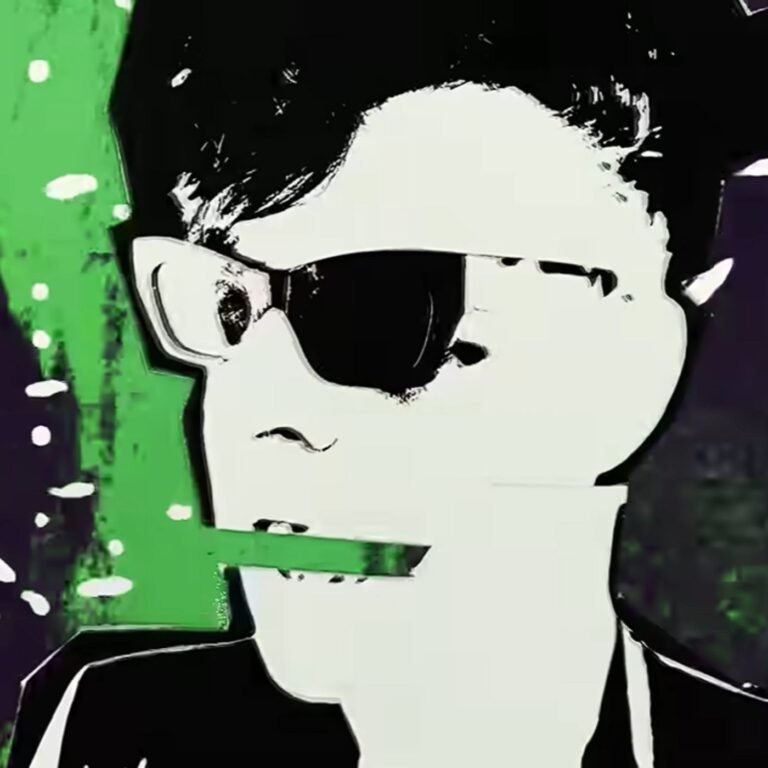
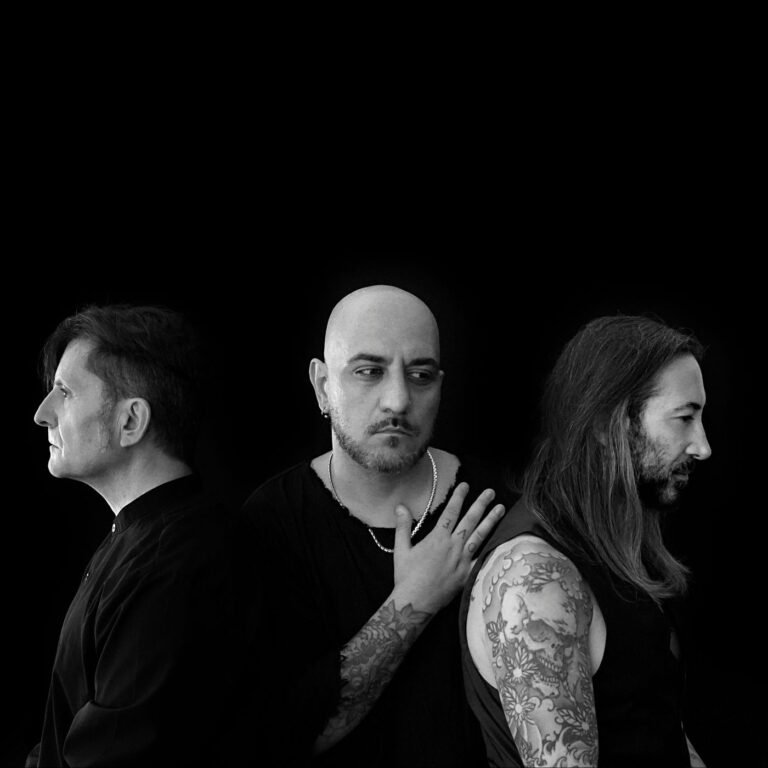
Review of Sister Medusa’s Latest Album: «Collide O Scope»
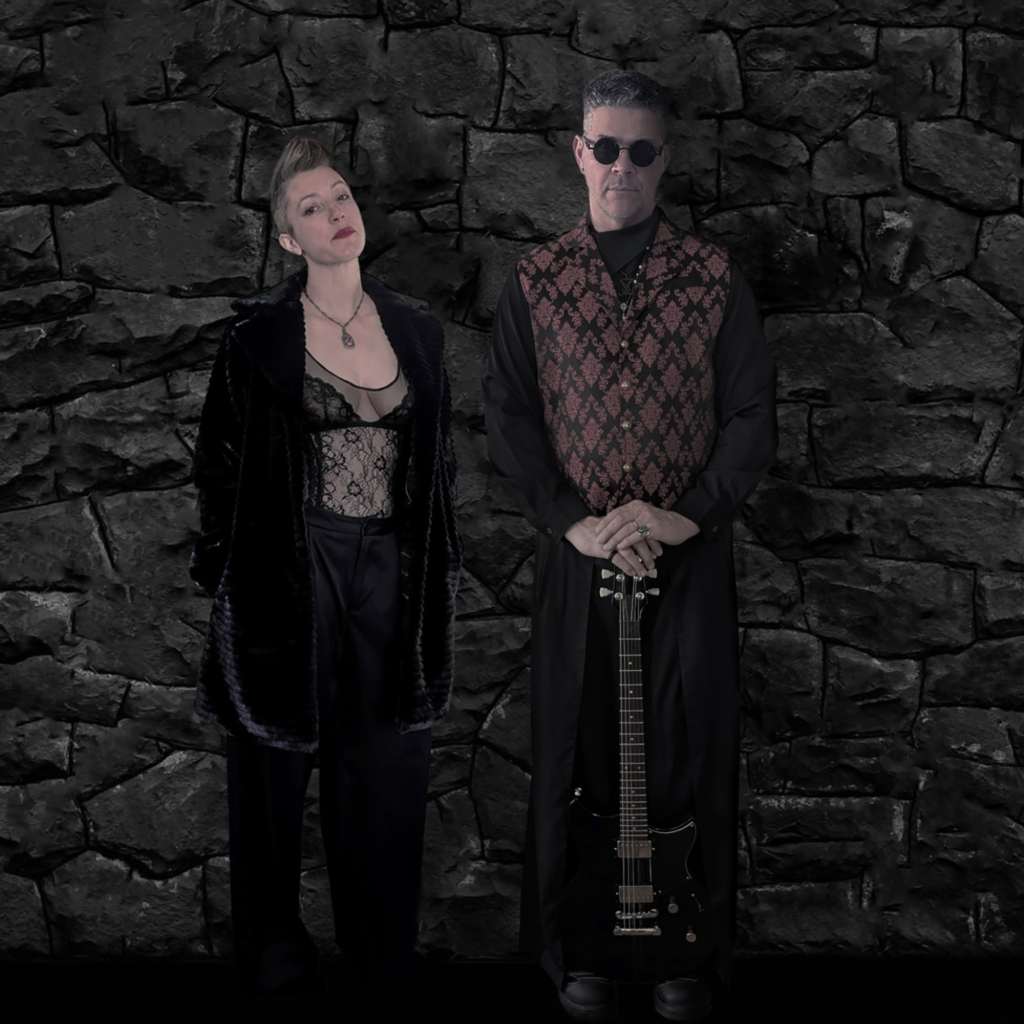
There are projects born out of commercial necessity, and others that sprout from a much more emotional need—a “labor of love” that answers not to the charts, but to artistic coherence. Sister Medusa, the duo composed of The Gemini and Vox Lustra, belongs strictly to this second category.
After two years of work and a hyper-demanding filtering process (where they discarded more than half of what they wrote to keep only nine songs), they have finally released «Collide O Scope». It is an album that feels like a journey through the entire DNA of dark music from the last 40 years.
The Concept
This album was born in a very authentic way. The Gemini composes in batches of tracks connected by the same style, almost like pieces of a puzzle. The best part is that, while each “sprout” is independent, once joined, they reveal something much deeper and more ambitious.
The name «Collide O Scope» says it all. It is the place where Gloom Rock and New Wave collide head-on, and where the drama of musical theater melts into the coldness of electronics. Though it may seem like a mix of opposites, the album never feels chaotic; thanks to impeccable production, everything fits with brutal logic. This is Sister Medusa.
The Architecture of Sound
The way The Gemini and Vox Lustra work is curious: the music dictates the rules. They usually start with a small idea on the keyboard or guitar and build the rest upon it. Vox Lustra’s voice enters at the end, acting as an emotional response to what the music is already telling.
They possess an incredible ability to toss the mathematical percussion of Tool, the melancholy of The Cure’s «A Forest», and the minimalism of Ritual Howls into the same shaker without anything sounding out of place.

The Lyrics of the Unconscious
Vox Lustra has a unique writing method: she sings the first thing that comes out, without overthinking, seeking the phonetics that best suit the music. In the end, mysterious lyrics are born from that chaos—touching on death, planetary care, or spirituality. It is a very free process, akin to Surrealist experiments, resulting in stories that seem plucked from a dream. «Collide O Scope» is, in essence, an album of purging. It is music as an escape and darkness as a refuge.
Track-by-Track Analysis
To fully immerse ourselves in the album’s universe, we break down each of the nine tracks. In conversation with the band, they revealed several details about the vocal recording process and the influences that shaped their composition. The opening track serves as a warning: this is no conventional record. It begins by shattering established patterns, playing with tempos so you never quite know which way it will turn.
1. None Cry Alone: The Rite of Resistance
Opening with this track is a true statement of intent. While the guitar sets a mournful tone, the rhythm is pure instinct and technique. The influence of Tool is evident not only in the drum sound but also in the use of time signature changes, which grant the piece a quality that is simultaneously mathematical and organic. Musically, the slow tempo allows the production to breathe, eventually flowing into a heavy, liturgical chorus.
The Lyrics: The lyrics here function like a shattered mirror. With «Is this me? / Enemy», Vox Lustra speaks to those moments when we no longer recognize ourselves. The sense of loss is immense, especially when she cries out «whom will I run to?»—a doubt that resonates with anyone who has ever felt forsaken. But Sister Medusa doesn’t stop at the personal; with «the sky burns through a reckoning», they remind us that the Earth is also demanding its due. I especially love the contrast in the chorus: on one hand, an accumulated exhaustion, and on the other, the mantra «drive on» that pushes you to keep going. Ultimately, the idea that «None cry alone» is the album’s great motto: no one weeps in isolation because, in this kaleidoscope of entropy, we are all caught in the same web.
2. Nightshade: The Whisper of the Ancestral
If the first track was a clash of forces, «Nightshade» is pure trance. The “repetitive little keyboard” acts as a minimalist anchor—a constant that, combined with the dry thud of the drums and the simultaneous entry of the bass and vocals, pulls us into a state of wakeful dreaming. What is incredible about Sister Medusa is that they don’t need a thousand instruments to sound dense; the magic lies in how the song circles back on itself and in Vox Lustra’s animal magnetism. Musically, it carries that solitary Darkwave atmosphere that the band has mastered.
The Lyrics: In this piece, the lyrics turn poetic to discuss reconnecting with the earth. Sister Medusa suggests that ancient wisdom hasn’t vanished; it’s still there, «whispered through the branches». However, they hold up a mirror with uncomfortable questions: can we only hear the noise and chaos we ourselves created? Vox Lustra questions if we’ve lost the capacity to feel the magic in our blood or if modern clamor has left us deaf. The whole track is a bridge to that liberating chorus: an invitation to untie ourselves from time and reclaim our most instinctive side. «Let us remember what it was to be wild» is the key phrase for reconnecting with the world.
3. It’s Only Love: The Heart of the Record
This isn’t just another song; it is the emotional closure of a story that began years ago with «The Ethyreal Song». Sister Medusa conceived it as a “spiritual sequel,” and you can feel it in the shared DNA that makes your skin crawl. The drums have that industrial, dry touch of Ritual Howls—the perfect contrast for Vox Lustra to shine with one of the most spectacular and heartbreaking performances of the entire work.
The Lyrics: «It’s Only Love» explores the existential void left behind when someone departs. Night falls, and with it, «that feeling of loneliness»—a state Vox describes as a necessary addiction: «I take that drug of loneliness». It is the only way to anesthetize time when the days become flat and gray. There is a brilliant moment of pure cynicism when an outsider dismisses the pain with «It’s only love», downplaying an emotion that is devouring you from within. Toward the end, the band returns to their ecological roots, asking how we can rest while the environment is destroyed, reminding us that love is, ultimately, the reason the damage affects us so deeply. As the lyrics say, «The chaos enters openly», turning this song into the true emotional core of Collide O Scope.
4. Don’t Fade Away: The Piano Elegy
«Don’t Fade Away» begins with a nod to the atmospheric keyboards we love from The Cure, but quickly mutates into a staggering dark ballad. The piano is the absolute protagonist, giving the structure a classical and majestic air. It is fascinating to see how they achieve such dramatic force without saturating the sound. Musically, this is where the musical theater influence mentioned by the band becomes most evident—not through pomposity, but through the narrative and dramatic capacity of the composition.
The Lyrics: Lyrically, this track is an emotional roller coaster. It starts by asking for a moment of sweetness («Sugar sweet») only to end by confessing an absolute void. Vox Lustra speaks of that sensation of being dead inside when someone is missing, but without losing sight of the fact that pain has something divine about it. The phrase «We play along to an endless song» perfectly summarizes the album’s sentiment: an eternal loop of waiting. Eventually, the track becomes almost mystical, suggesting that when the silence is total, that is when we truly feel the presence we seek.
5. In The Grotto: Playing with Sound
If there is one piece in Collide O Scope that breaks the emotional inertia, it is «In The Grotto». It’s common in albums of this magnitude to find a track that, due to its experimental nature or placement, seems to take a back seat to the brilliance of its predecessors. Musically, this cut is the result of a sound design exercise: it was born from a “vocal trick” by Vox Lustra imitating a train whistle, which was sampled and arpeggiated to build the song’s foundation. This technical origin gives it a mechanical and strange quality that contrasts with the warmth of the preceding piano. For some, it might break the narrative; for others, it represents the most experimental and surreal side of Sister Medusa.
The Lyrics: Despite the musical experimentation, the lyrics are like a small Gothic horror story. Vox invites us down to a place where light doesn’t reach and «time feels different down here». The key moment is that macabre yet strangely tender chorus: inviting someone to leave their bones next to yours is the ultimate expression of loyalty in the Sister Medusa universe. As it ends with «The gateway is open», it becomes clear that the song is actually a threshold—a fascinating testimony of how far they are willing to go with their experimentation.
6. Moon Spell: The Liturgy of the Moon
With «Moon Spell», Sister Medusa regains its grandest and most stirring side. After the strangeness of the grotto, this song returns us to majestic themes, starting with a triumphant piano that recalls the elegance of «Don’t Fade Away». But here, everything sounds more powerful: the guitar becomes more rock-oriented, and the collaboration with Di—with her vocals and violin—adds a classical air that elevates the track completely. Musically, it is one of the richest tracks on the album, where the violin intertwines with distortion to achieve a perfect balance between fragility and the force of nature.
The Lyrics: In «Moon Spell», the moon is not just an ornament; it is a spiritual guide. It all begins with a brutal midnight clarity: «Watching the moon… I knew myself completely». It’s that moment where, alone at last, you recognize yourself. There is a powerful image of decay: a house in ruins where light filters through holes in the roof, teaching us that vulnerability has its own beauty. Amidst the sound of crickets and a sense of mysticism, the song ends like a prayer: «Please shine a little further on my path». It’s an acknowledgment that the path is difficult and dark, and that we need something to believe in to keep going. Without a doubt, one of the most beautiful moments of the album.
7. Just One Day: The Cathedral of Time
If Collide O Scope is a tribute to the influences that shaped the band, «Just One Day» is the station where the train stops in the golden age of Gothic Rock. The band is honest in declaring that the opening guitar riff is a direct tribute to «A Forest» and «Prayers for Rain». However, the dry drum beat and the initial keyboards immediately teleport us to the majesty of 1987, evoking the density of The Sisters of Mercy’s «Floodland» and especially «Never Land». The guitars regain that sharp, melodic tone from the album’s start, creating a solid base for some of the most existentialist lyrics on the record.
The Lyrics: «Just One Day» is a sort of Carpe Diem in a Gothic key. The lyrics invite us to gather all our memories into one pile and «pick the pockets of your best times». It is a challenge to live everything to the fullest, even if only for a day, condensing every dream and failure into a single breath. It ends up being a reminder of how ephemeral we are—an impeccable song that shakes you and asks you not to let life pass you by without truly feeling it.
8. By Oath: The Twilight of the Gods
This is, without a doubt, the most confrontational moment of the album. Vox Lustra’s entry is majestic, but the spotlight is stolen by an incredibly heavy bassline. This is Gloom Rock in its purest and most aggressive state, using distortion to scream a message of empowerment against the status quo.
The Lyrics: In «By Oath», melancholy steps aside to make room for rage. The lyrics are a face-to-face judgment against a power figure that has failed us. The sentence is devastating: «You’re not a savior». The veil falls, the power of that “god” vanishes, and former devotion turns to hate. That final oath («I bind you») is an act of total empowerment. It’s like telling that higher power: “I bind you to your own word.”
9. Seventeen, Serpentine: The Finale
Closing an album like this is no easy task, but Sister Medusa does it with incredible mastery. «Seventeen, Serpentine» is a piece that builds in intensity. It begins simply, with a guitar that seems to mark the path, but soon the rhythm and vocals take absolute control. Vox Lustra’s voice starts almost as if telling you a secret and ends in a spiral of intensity that leaves you breathless. It is the definitive impact—the final point needed for an album as rich in nuances as this.
The Lyrics: In this final track, the lyrics become raw and physical. It deals with the dismantling of lies and the search for real freedom. The figure of the serpent represents those slippery deceptions that surround us, and the only way to end them is to “scratch” until honesty is found. It is fascinating how they use pain as an escape route; repeating «Hurt» over and over is their way of saying that only by accepting what hurts can we heal. It is the perfect finishing touch: after traveling through all the darkness of the kaleidoscope, we are left with the strength necessary to control our own destiny.
Conclusion
It is difficult to find projects as honest as that of The Gemini and Vox Lustra today. «Collide O Scope» is, above all, a triumph of authenticity. Sister Medusa has done what many groups are terrified to do: look their idols in the eye without allowing their shadows to eclipse them. As they say themselves, it is pure love for art that seeks only to find harmony in the midst of darkness.